Why we ask for pre and post reflections
Every time you open the Bearmore app to begin an activity, there’s an initial pre-activity reflection to complete. You’re invited to consider how you feel in that moment across three areas:
“How’s your energy right now?”
“How calm are you feeling?”
“What’s your current mood?”
Then, after the session ends, we ask again. This time, it includes those same three questions, along with two more: how focused you were and how much you enjoyed it.
These pre and post reflections might seem simple, but they’re doing something important. They prompt you to pause and pay attention to how you’re feeling, so you can notice where you are starting from and then, when you finish your session, what changes or stays the same. Your reflections help us build a clearer picture of what’s actually making a difference for you. Not in theory, but in your real, lived experience.
Each time you respond, you’re choosing one of four options. These options form a small, structured scale designed to track subjective change without requiring much time or effort. The scales are: energy, calm, mood, focus and enjoyment.
This article explains where the scale format came from, why it’s a useful tool, and how your responses help create personal and meaningful insights that will benefit you.
What the scales are
Scales like these have consistently been used in research and are widely used in psychology, medicine, education and wellbeing research. They’ve helped track everything from stress and anxiety to pain, focus and emotional regulation. What makes them reliable is that they’re repeatable, quick to use, and flexible enough to fit into real life.
We’ve adapted this approach to create Bearmore’s own reflection scales. They are not designed to diagnose or judge performance. They are here to help you notice internal shifts, such as changes in energy, mood, calm, focus or enjoyment, from before to after a session.
Used regularly, they support greater self-awareness and give you a clearer sense of what is helping. At the same time, they form the foundation of the insights Bearmore generates to help you decide on your next steps. Over time, this simple check-in becomes a way to learn what works for you so you can make better decisions about how to focus your time.
Rather than use technical or medical terms, we chose language that reflects the way people naturally talk about how they feel.
Our scales are based on subjective measures for a reason. The areas we ask about like energy, mood and calm, don’t have precise or agreed-upon ways to be measured objectively. For example, energy is a widely used word with many meanings. We focus on one in particular: your felt internal capacity or liveliness, drawn from your own sense of how much usable physical, emotional or mental capacity you have in a given moment.
This sense of energy can be shaped by mood, health, or even what’s happening in your environment. And research across psychology, physiology and behavioural science shows that this felt capacity doesn’t always align with measurable factors like sleep, nutrition or physical activity.
That doesn’t mean subjective and objective understandings are in conflict. They’re just describing different things. One is personal and felt. The other is physical and measured. At the moment, researchers agree there’s no straightforward or reliable way to connect what the body shows with how someone feels. Measuring would also require varied types of wearable technology, which sits outside the experience Bearmore is designed to support.
So instead, we ask. We rely on your own reflection as the most accurate window into your internal state. It is the clearest way to understand how a session may have shifted something that matters to you.
How each scale works
Each of our five scales uses four simple response options, described in plain language and supported by visual icons. These options are designed to feel familiar and intuitive, so you can answer based on how you actually feel and not how you think you should.
Here’s how we define each one:
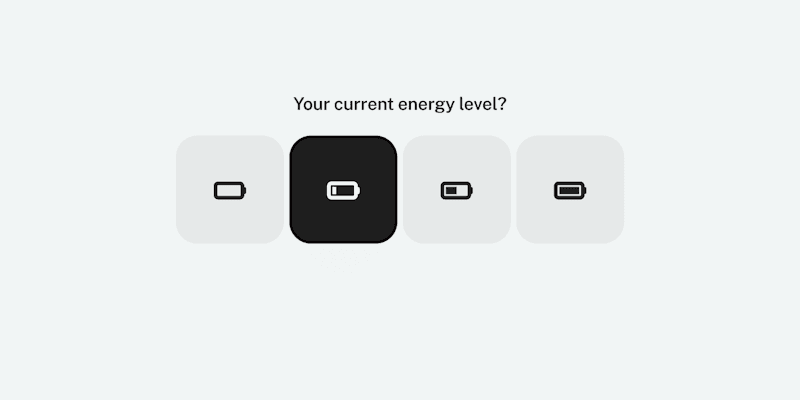
Energy
- Very low: Feeling completely drained, fatigued, or exhausted. No motivation or drive to do anything.
- Low: Feeling somewhat tired or lacking drive. Able to perform basic tasks, but with decreased enthusiasm and vigour.
- Moderate: Feeling. neither particularly energetic nor fatigued. Can carry out most tasks with a reasonable amount of vigour and enthusiasm.
- High: feeling invigorated, lively, and motivated. Ready to tackle challenging tasks and maintain sustained activity levels for long periods.
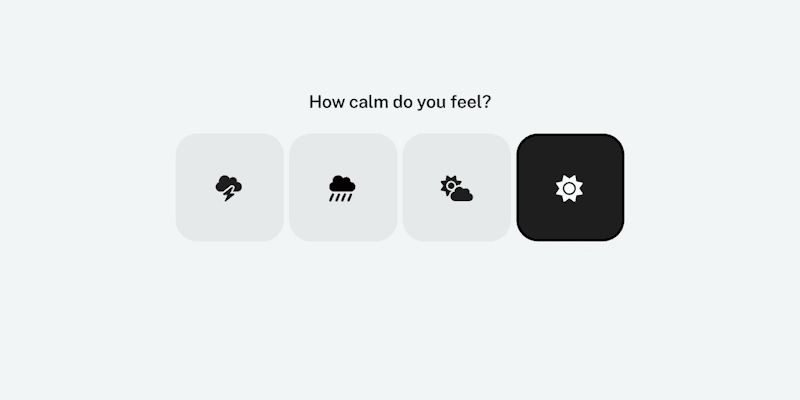
Calm
- Wired: Agitated, restless, tense.
- Uneasy: Unsettled. You’re functioning, but it doesn’t feel easy.
- Composed: Chilled out overall but ready for action.
- Mellow: Feeling completely relaxed, and possibly heavy or sleepy.
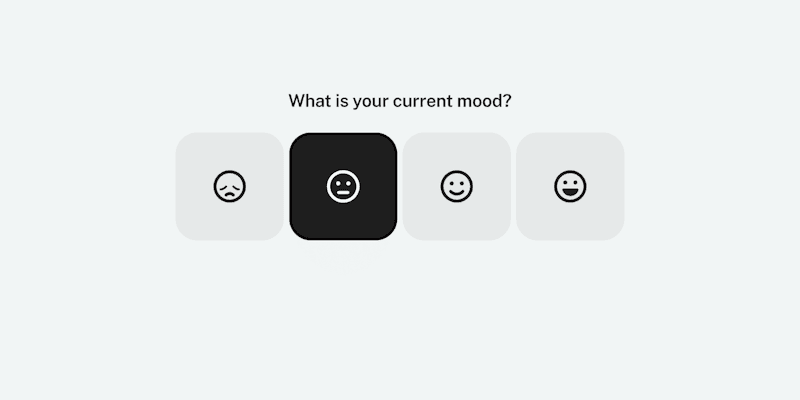
Mood
- Poor: Feeling unhappy, sad, or negative.
- Neutral: Feeling neither positive nor negative. Indifferent.
- Good: Feeling generally positive with minor fluctuations.
- Excellent: Feeling fantastic, happy, and positive.
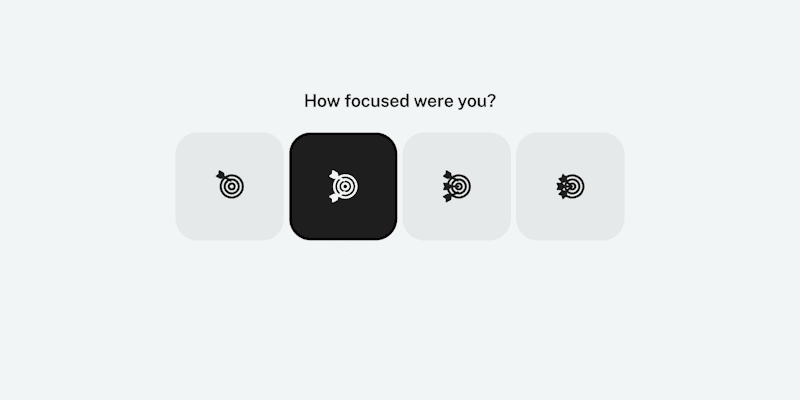
Focus
- Not focused: Unable to concentrate or maintain focus.
- Slightly focused: Some ability to concentrate with frequent distractions.
- Focused: Maintained good concentration with minor distractions.
- Highly focused: Excellent concentration with no distractions.
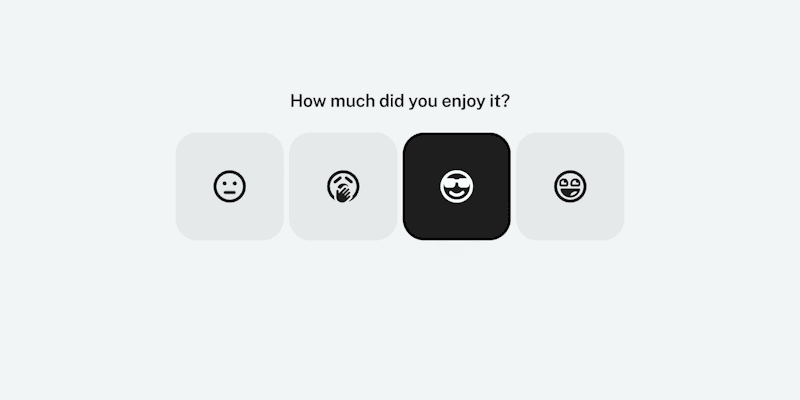
Enjoyment
- Did not enjoy: Did not find the session enjoyable at all.
- Slightly enjoyed: Found the session slightly enjoyable.
- Enjoyed: Found the session enjoyable.
- Loved it: Absolutely loved the experience.
Why this matters
These pre/post reflections aren’t just a design feature. They’re the way you develop greater understanding of yourself and the way Bearmore can help you see what’s shifting, what’s worth adjusting, and what might be helping more than you realise. And we do it in a way that’s fast, human and consistent, so that over time, the data becomes more meaningful to you, not less.
For you, they build self-awareness and allow for course correction. For us, they power the insights and guidance we generate for you over time.
And that’s just the beginning. As these reflections start to repeat, they begin to tell a story. One that’s unique to you, and powerful when seen clearly. That’s where pattern-based insight comes in.
How we use patterns to shape insight
While a single pre/post reflection can be meaningful on its own, the real power comes from noticing patterns.
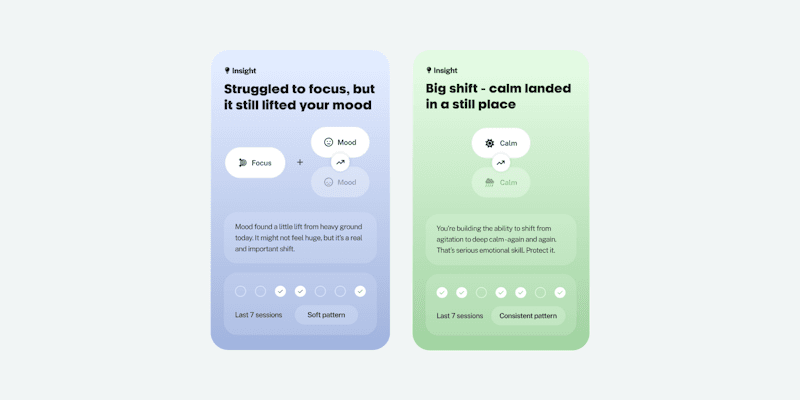
Each time you complete a session of a specific activity, Bearmore compares how you felt before and after. If you’ve seen the same kind of shift, or lack of shift, show up repeatedly, we start to name that. Not with judgment, but with care. These patterns help us reflect something back to you that you might not have noticed yet.
We track whether a certain picture has happened just once, is beginning to repeat, or has become a clear or consistent pattern. That’s how Bearmore decides whether to simply mirror back what happened, gently suggest it might be worth paying attention to, or offer clearer guidance around what’s working or what might need adjusting.
Here’s how it works:
- Gentle notice: You’ll see this when something happens once or twice. This is just an invitation to be curious.
- Soft pattern: A pattern or picture is starting to repeat. We highlight it gently and may invite light reflection or experimentation.
- Clear pattern: The trend is showing up strongly. We name it directly and suggest ways to build on it or adapt.
- Consistent pattern: This experience is showing up again and again. We treat it as a reliable signal, whether it’s something to reinforce or reconsider.
These insights are drawn from your own responses, not from averages or assumptions. If you’ve consistently left a certain activity with more energy, or often found yourself flat after the same activity, that’s valuable information. Bearmore reflects those emotional outcomes back to you so you can protect what’s working or make a change on what isn’t.
Over time, these reflections and insights can help you tune in to your own felt experience more clearly. Not just tracking for the sake of it, but understanding how your system reacts and using that understanding to guide smarter, more supportive choices.