Foundations

News Description

From scattered efforts to a strategic wellness recipe

When our wellness efforts are scattered, progress can stall and it becomes hard to tell what’s actually working. This article offers a simple alternative, treat your wellbeing like a recipe, with a clear plan, a sensible order, and regular check-ins. You’ll learn how small “if-then” plans can make follow-through easier, why the right combinations of activities can reinforce each other, and how reflection helps you adjust as you go. It’s a practical way to stop collecting habits, and start building a routine that adds up.


The long game of habit building: why quick fixes don’t last

We’ve all had habits that start strong, then quietly drop off, not because we lack motivation, but because lasting change takes longer than most people expect. Here we explain what neuroscience shows about how habits actually form, through repetition, cues, and reward, as control shifts from effortful choice to something more automatic. It covers why consistency beats intensity, why the “21 days” idea doesn’t hold up, and how linking a new habit to an existing routine makes it easier to repeat.

Why motivation can stall when identity pushes back

When you start Bearmore, we ask what matters to you, then recommend activities most likely to help. Sometimes one of those suggestions sparks an immediate “not for me”, even if you do want change. This Field Note explains why that reaction is often about identity, not motivation, and how self-image can override logic in the moment. You’ll get practical ways to work with the resistance, starting small, choosing an easier version, and letting a few new experiences gently widen what feels like “you”.

Building an evidence rating system

The wellness industry is full of “backed by science” claims, but most people never show how those calls are made. Here we lay out Bearmore’s evidence rating system, the method we use to score research quality and turn it into clear activity ratings. It explains what we look for in studies, how we weigh different types of evidence, and why results matter as much as rigour. If you’ve ever wondered what “evidence-based” actually means here, this is the behind-the-scenes version.

Making sense of practice levels

Two of the most common questions in wellbeing are, “How often should I do this?” and “How long should a session be?” This article explains how Bearmore built Practice Levels to answer those questions in a way that’s usable, and honest about what the research can and can’t tell us. It covers how we extract duration and frequency evidence across dozens of activities, how we label what’s direct versus inferred, and why the final system needed flexibility rather than fixed rules.

Inside Bearmore's approach to measuring activity evidence strength

Bearmore puts a lot of weight on evidence, but we also want you to be able to see how we make those calls. Here’s an inside look at how we evaluate activities for inclusion, and how we score the strength of the research behind them. It walks through the process, defining the activity, finding the best studies, validating what we use, and translating it into an evidence factor that reflects impact across wellbeing. It also covers the limits of any rating system, and how we keep improving it.

Get back into your life

Time well spent

Download on the App StoreGet it on Google Play
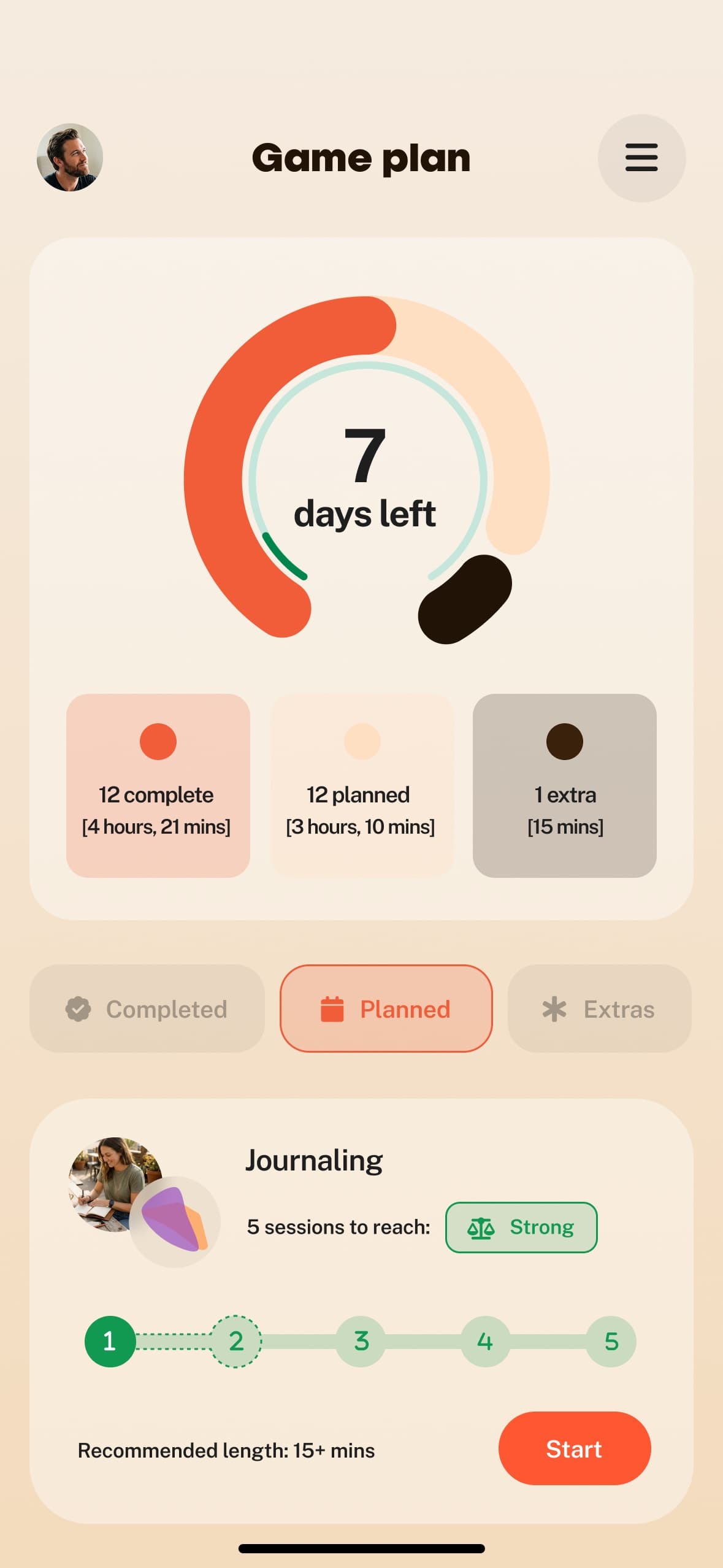
The Bearmore app’s Game plan screen, showing days left in the cycle, sessions completed and planned, and the next journaling session
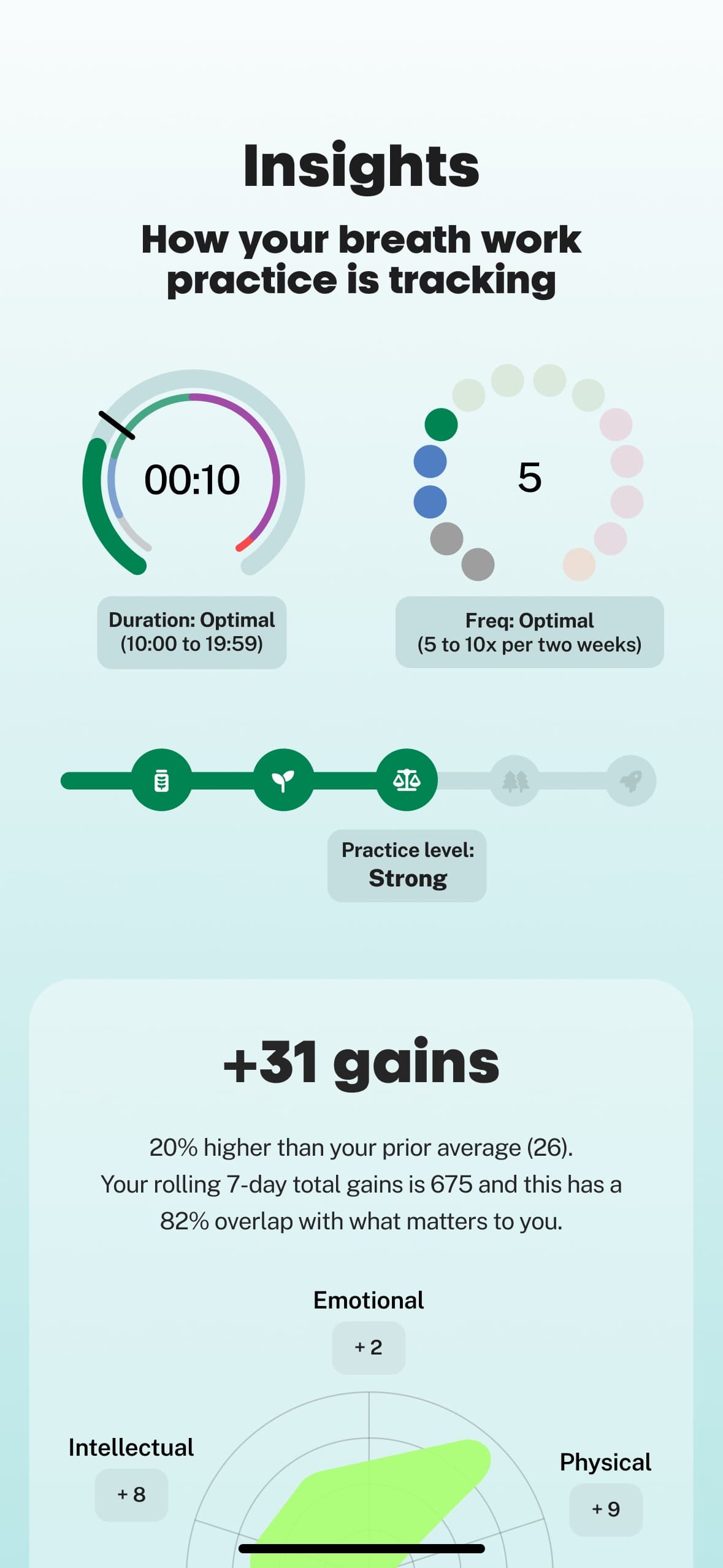
The Bearmore app’s Insights screen, showing breath work duration and frequency, practice level, and a gains breakdown
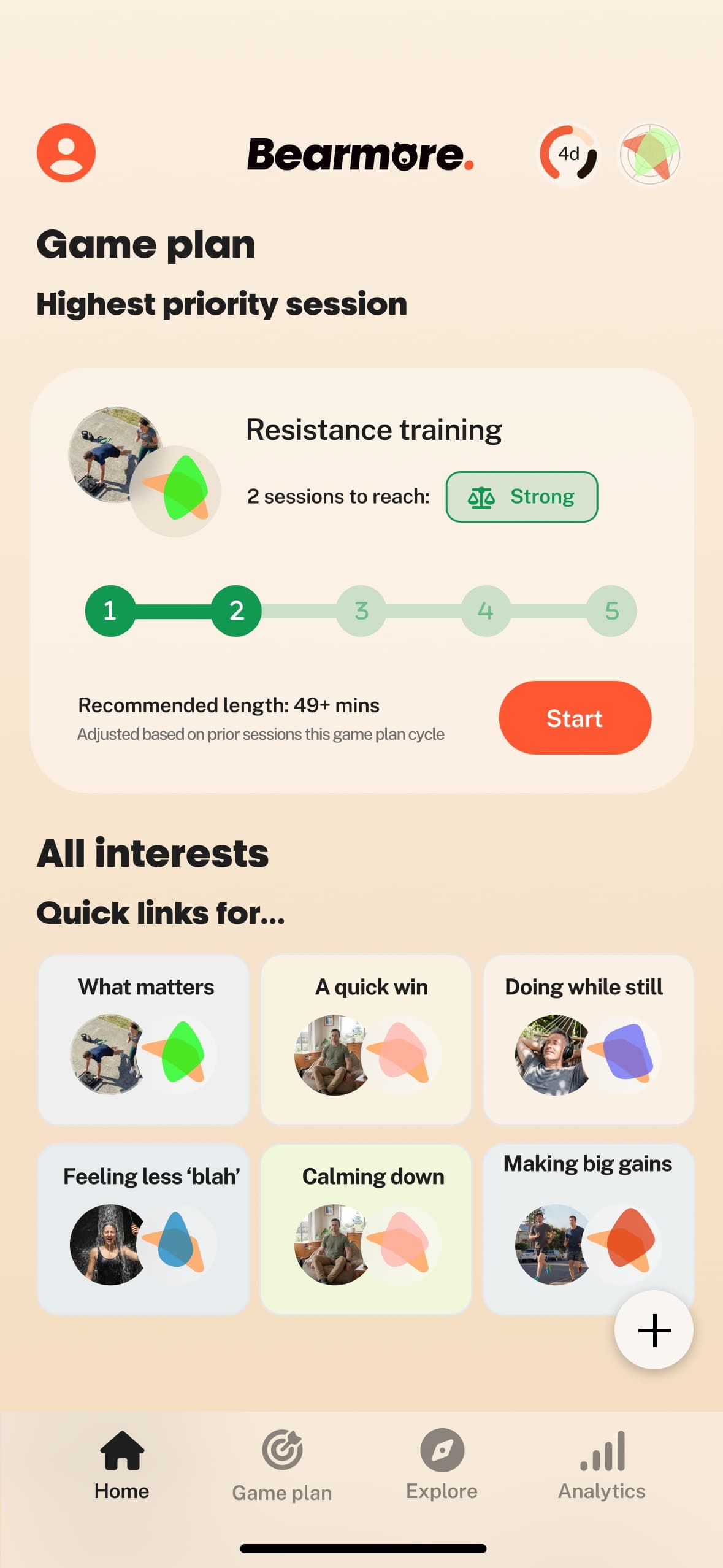
The Bearmore app’s home screen, showing the highest-priority session and quick links for each interest