What matters: Your life. Your priorities. Not a preset plan.

Features

Most wellbeing apps start with a preset list of goals, then ask you to squeeze your life into it. Bearmore flips that, you define what you want to work on, in your own words, and the app adapts around you. This article explains how your what matters statement is translated into evidence-backed focus areas, then used to personalise recommendations. The aim is simple, less guesswork, and a plan that makes sense for your priorities and the way you actually live.

Most apps start by making you adapt to a one-size-fits-all list of goals.

Train harder. Stress less. Sleep deeper. Meditate daily.

They all sound great, but never really capture the complexity of real life or the ‘why’ sitting underneath.

At Bearmore, we flipped that script.

What matters is defined by you, then we adapt.
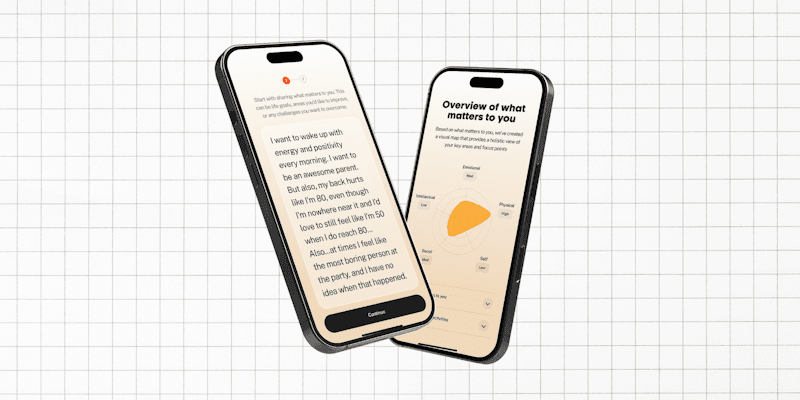
Two phones showing the Bearmore app: a free-text screen where someone describes what they want, and the resulting “Overview of what matters to you” chart

When we ask what matters at Bearmore, we aren’t asking you to chose a problem from a list. We’re asking you to tell us what’s really important to you. We’re interested in what’s going to make a difference to your life. The thing beneath the thing you feel you should be working on.

What matters might be feeling more motivated so you can write that epic novel when you get home from work. Feeling mentally strong so you can cope with your stressful financial situation. Staying healthy so you can show up sharp at work and get that pay rise.

Sometimes, it’s all of it.

Bearmore lets you explain what matters - in your words, not ours. Like you’d tell a coach, a mate, or a therapist. For example:

“I want to feel fit and look good in the mirror, write something meaningful, and be more dialed-in at work.”

Whatever it is—it’s yours.

Physical, social, emotional, intellectual, personal, or a mix.

Short-term, long-term, crystal-clear, or messy-as-hell.

Things you are trying to achieve, or avoid.

Short, long, a novel or just a string of emojis.

How it works inside Bearmore

  1. You write your what matters statement. Free text input. No filters. No character limits.
  2. You dial-in what you want to focus on. Using specialised algorithms we play it back to you and translate it into ranked evidenced-backed focus areas. You can confirm our understanding, and refine the area selections.
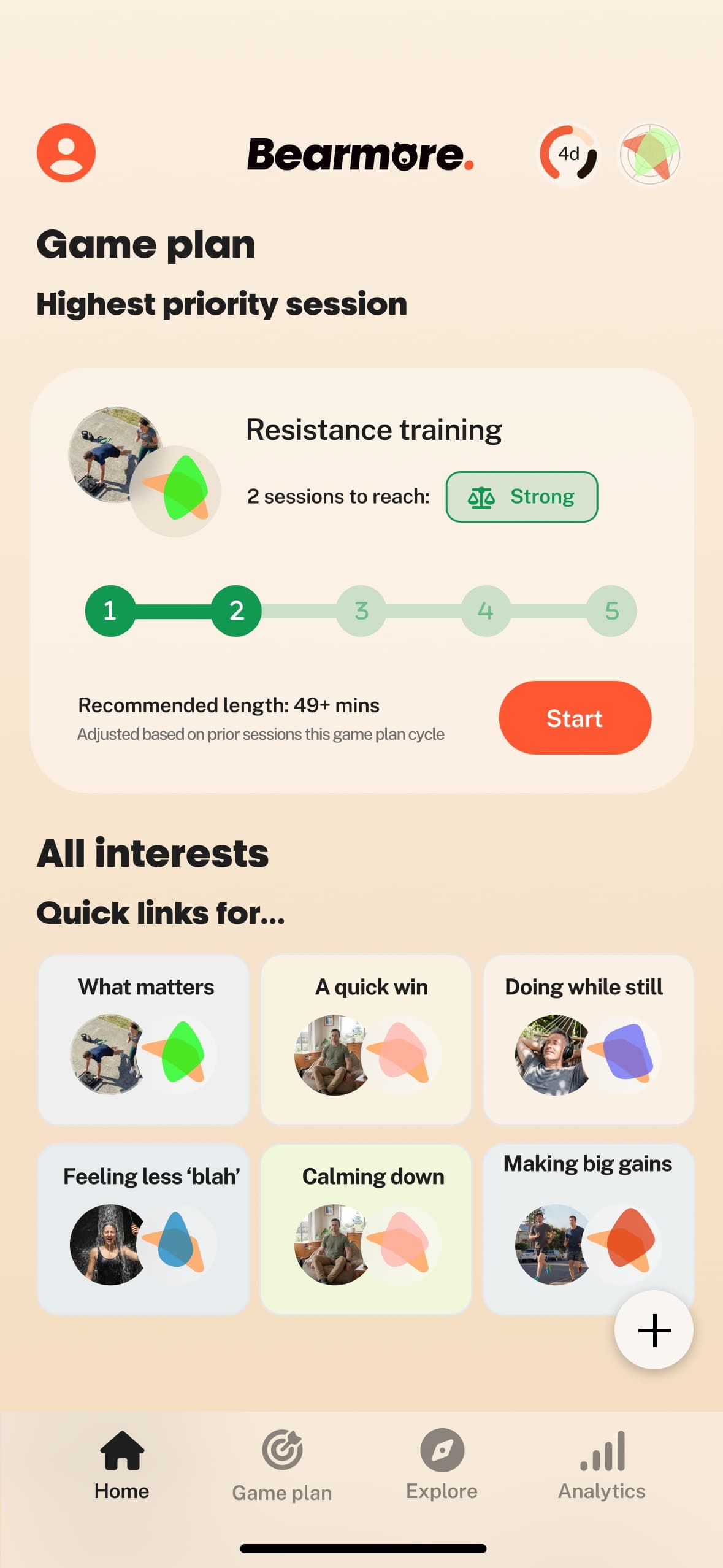
  3. Your what matters is visualised. A simple, clean, five-dimension snapshot is created to illustrate what drives you and where you are planning to focus.
  4. We use it to fully personalise your experience. This information and visual is used throughout the product to show you which activities are going to help the most and how your actions are moving the needle.
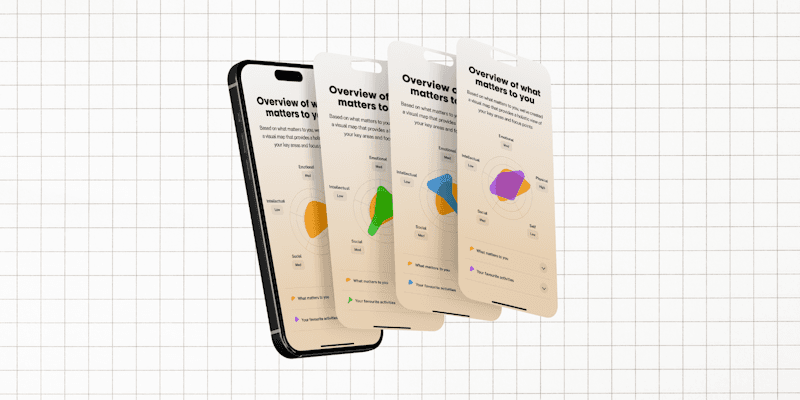
Four “Overview of what matters to you” screens fanned out, each showing a different profile across the same five dimensions

No fluff. Just straight-line feedback between what you want and what you're doing.

We do this mapping for a reason: so every activity you see connects directly to what matters most to you. Our recommendations aren’t random - each one is grounded in evidence and tagged to show exactly which focus areas it supports.

You’ll see this at a glance every time you open an activity. No guesswork. Just effective use of your time.

Why it matters

Because what matters is the bridge between:

  1. Your goals
  2. Our science-backed approach
  3. The actions you take inside Bearmore

This is where it gets personal. This is where it sticks.

No two people's what matters are the same.

And that's exactly the point.

And when things shift? So can your What Matters.

Life changes. Your focus changes. Bearmore stays in sync with you. You get results.

...more insights

Foundations

The long game of habit building: why quick fixes don’t last

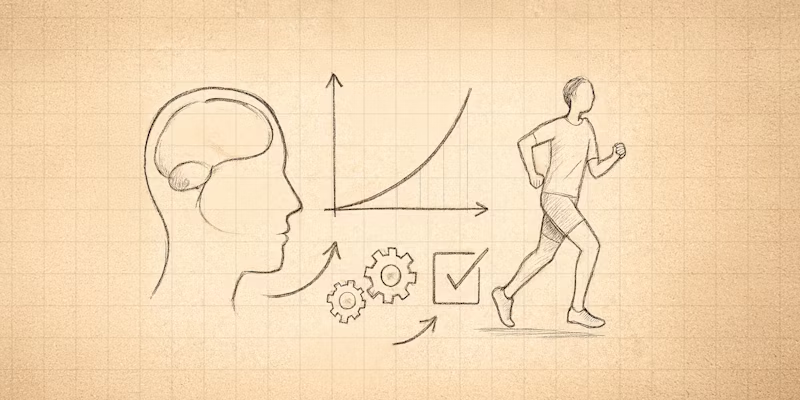
We’ve all had habits that start strong, then quietly drop off, not because we lack motivation, but because lasting change takes longer than most people expect. Here we explain what neuroscience shows about how habits actually form, through repetition, cues, and reward, as control shifts from effortful choice to something more automatic. It covers why consistency beats intensity, why the “21 days” idea doesn’t hold up, and how linking a new habit to an existing routine makes it easier to repeat.

Foundations

Inside Bearmore's approach to measuring activity evidence strength

Bearmore puts a lot of weight on evidence, but we also want you to be able to see how we make those calls. Here’s an inside look at how we evaluate activities for inclusion, and how we score the strength of the research behind them. It walks through the process, defining the activity, finding the best studies, validating what we use, and translating it into an evidence factor that reflects impact across wellbeing. It also covers the limits of any rating system, and how we keep improving it.

Foundations

From scattered efforts to a strategic wellness recipe

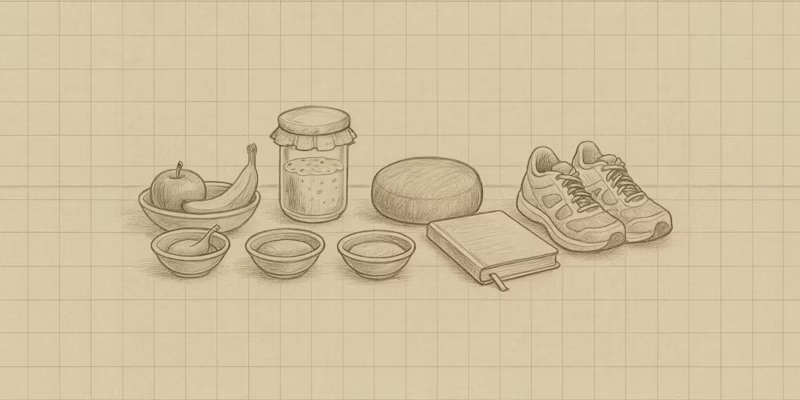
When our wellness efforts are scattered, progress can stall and it becomes hard to tell what’s actually working. This article offers a simple alternative, treat your wellbeing like a recipe, with a clear plan, a sensible order, and regular check-ins. You’ll learn how small “if-then” plans can make follow-through easier, why the right combinations of activities can reinforce each other, and how reflection helps you adjust as you go. It’s a practical way to stop collecting habits, and start building a routine that adds up.

Get back into your life

Time well spent

Download on the App StoreGet it on Google Play
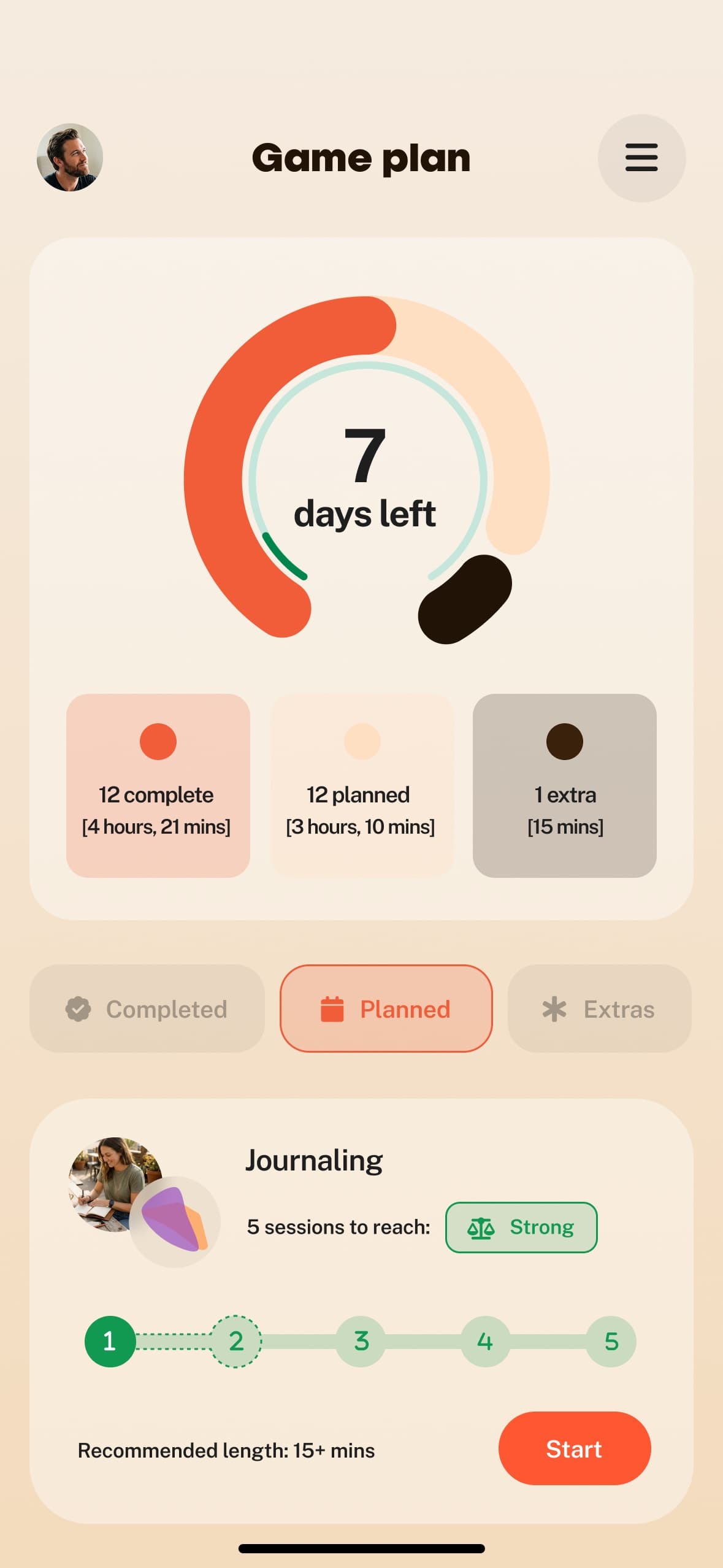
The Bearmore app’s Game plan screen, showing days left in the cycle, sessions completed and planned, and the next journaling session
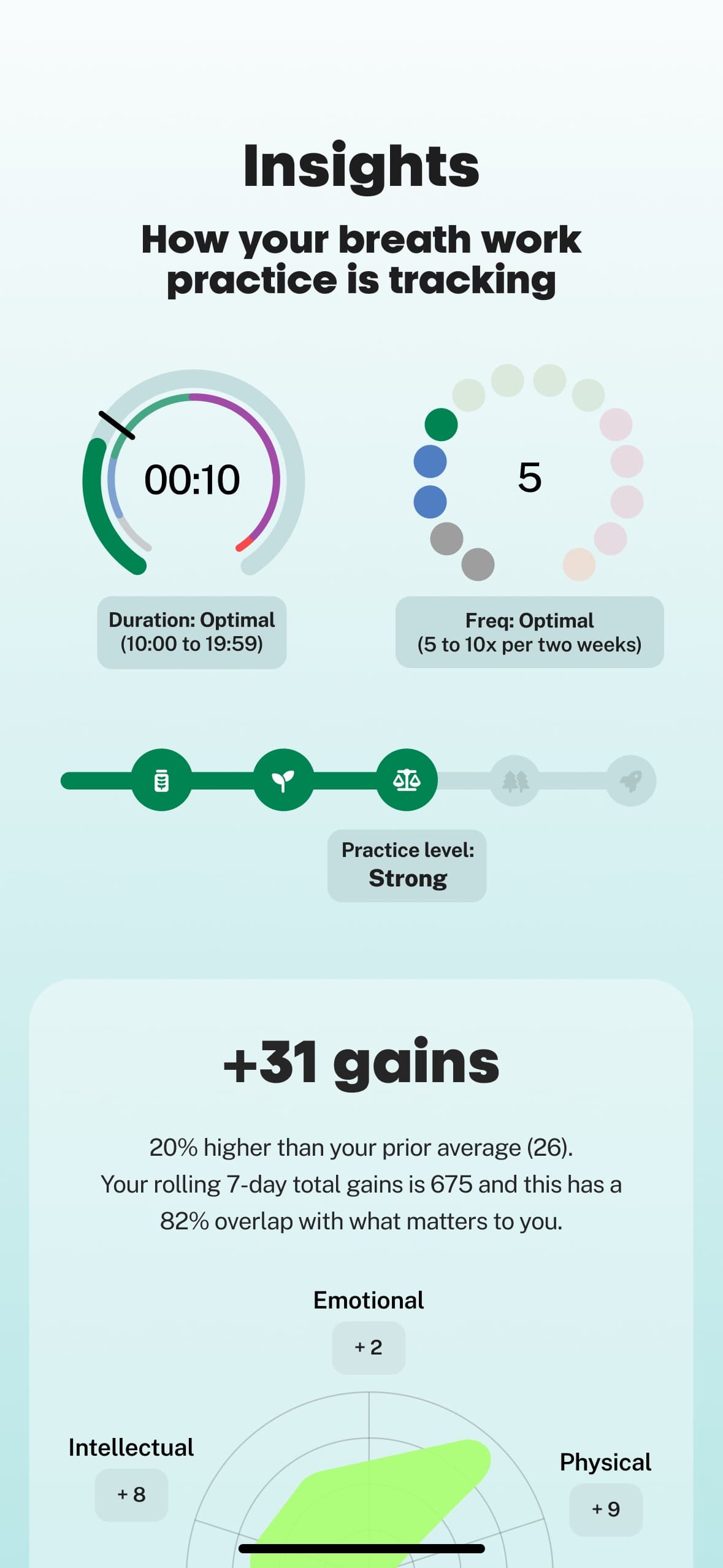
The Bearmore app’s Insights screen, showing breath work duration and frequency, practice level, and a gains breakdown
The Bearmore app’s home screen, showing the highest-priority session and quick links for each interest